Table Of Content

Congenital trichorrhexis nodosa is usually hereditary, it runs in families, and first develops at a very young age. Physical damage to the hair through overprocessing is difficult to treat. The best approach is to cut off as much damaged hair as possible, avoid further chemical processing, be gentle with your hair, and wait for new, undamaged hair to grow in. While there are cosmetic treatments to help "glue" damaged hair back together, they only work for a short time and have to be reapplied regularly. The end result is never as good as the original, undamaged hair. Seen under a microscope, the hair fibers have lost their cuticle covering over the nodes while the constrictions keep their cuticle.
Ways to Stop Pulling Your Hair
These conditions are much more common in men who are frequently cutting beard hairs. Folliculitis is a common skin condition that’s often caused by an infected or inflamed hair follicle. Folliculitis often has a psychosocial impact because of its appearance.
Lack of new hair growth
This condition can affect adults and children, and hair loss can begin suddenly and without warning. Hair from the scalp typically falls out in small patches and is not painful. Hair in other parts of the body, including the eyebrows and eyelashes, may also fall out. Over time, this disease may lead to alopecia totalis, or complete hair loss. In men, hair loss can begin any time after puberty and progress over the course of years or decades. It starts above the temples and continues around the perimeter and the top of the head, often leaving a ring of hair along the bottom of the scalp.
Central Centrifugal Cicatricial Alopecia
Danger triangle in your face means plucking nose hairs can kill you - Metro.co.uk
Danger triangle in your face means plucking nose hairs can kill you.
Posted: Tue, 22 Nov 2016 08:00:00 GMT [source]
Along the length of a hair fiber there are nodes and constrictions making the edge of the fiber undulate. Hair loss as a result of physical hair defects are rare compared to other causes of alopecia, but the most common ones are listed below. Because eyelashes protect your eyes from dust and other irritating things, pulling them out can make you more likely to get eye infections and injuries. Pulling can also hurt the delicate skin on your eyelids, which makes it harder for eyelashes to grow back.
Alopecia areata is an autoimmune disease that causes hair to fall out in nickel- or quarter-size patches. “Your body’s immune system is attacking the hairs,” Brodell says. Other vitamins and minerals may also play a role in hair loss.
This causes hair to fall out all over the scalp without new hair growth. To promote hair regrowth after it has been pulled out, it is important to keep the scalp and hair follicles healthy. This can be achieved by maintaining a balanced diet rich in vitamins, minerals, and proteins. Using gentle hair care products, avoiding excessive heat styling and chemical treatments, and massaging the scalp regularly can also help stimulate hair growth. Certain conditions, such as alopecia areata or scarring alopecia, can permanently damage the hair follicles and prevent hair from growing back. In these cases, medical intervention may be necessary to stimulate hair growth or explore other hair restoration options.
Signs of dead hair follicles
If you pull out a strand of hair with and notice a small mass at the root, this is just a hair bulb. Hair follicles house the hair bulb and are a permanent part of your skin. While pulling your hair can temporarily damage a follicle, a new hair bulb will form. Consulting a hair specialist for a thorough scalp examination is essential to determine the health of your hair follicles.
What do blocked hair follicles feel like?
The realization that they are pulling out hair can lead to more feelings of anxiety and embarrassment. This creates a cycle of anxiety, hair pulling, temporary relief then anxiety, embarrassment, and hair pulling again. Doctors often prescribe oral medications to be used along with topical minoxidil because studies show the combination boosts hair production. Low-dose oral minoxidil (prescribed off-label) has been found to be effective and safe for most patients, Mirmirani says.
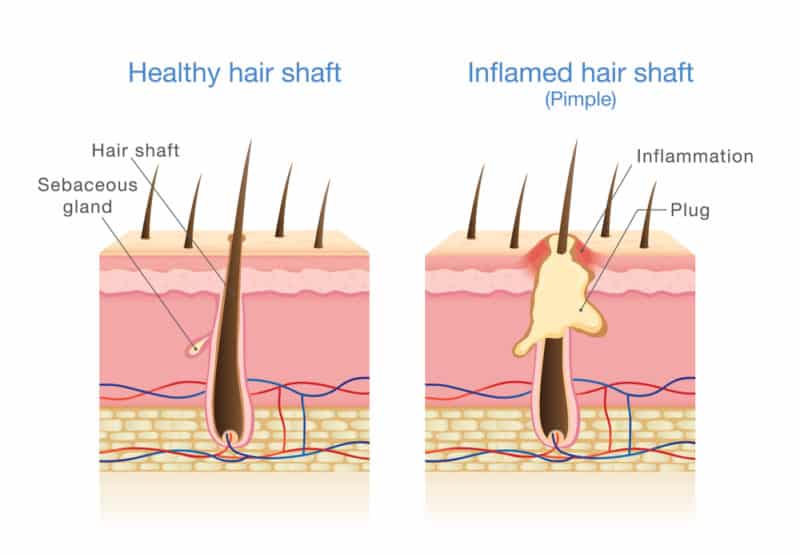
If your hair is falling out more than normal, it's important to determine the cause; in some cases, you may need a blood test or other tests. Most of the time, no treatment is necessary, and your hair will return to its normal growth cycle. Excessive hair fallout from taking medication is usually temporary. If you believe medications are causing your hair to fall out, talk to your healthcare provider about changing dosages or finding an alternative medication. Folliculitis is usually diagnosed during a physical exam with your healthcare provider. This can be done during an appointment and in most cases, you do not need to see a skincare specialist.
Being gentle with your hair while it’s experiencing change is important so as not to exacerbate any thinning. It goes without saying that excessive heat and chemical treatments aren’t a good idea, but try and opt for protective hairstyles too. “Opt for hairstyles that minimize tension on the hair follicles, such as loose braids, buns or ponytails,” advises Gaboardi.
Does Plucking White Hair Cause More To Grow In Its Place? Here's What We Found Out - SAYS
Does Plucking White Hair Cause More To Grow In Its Place? Here's What We Found Out.
Posted: Fri, 05 Aug 2022 07:00:00 GMT [source]
Your primary care physician is usually able to diagnose folliculitis and provide a treatment plan. In certain, severe or persistent cases, an appointment with a dermatologist is recommended. The congenital form is very rare, but some people have naturally weak hair where the cuticle is not properly produced.


No comments:
Post a Comment